Adjustable self Aligning Pad About
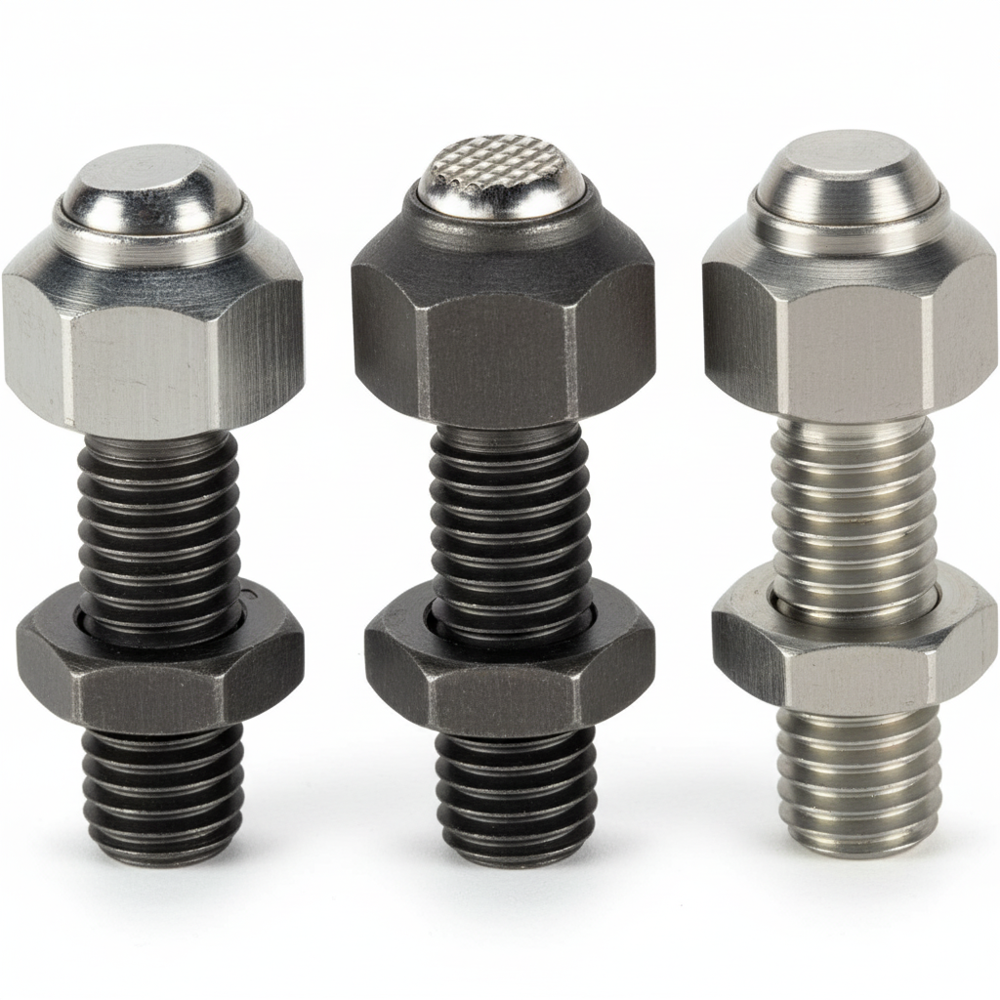
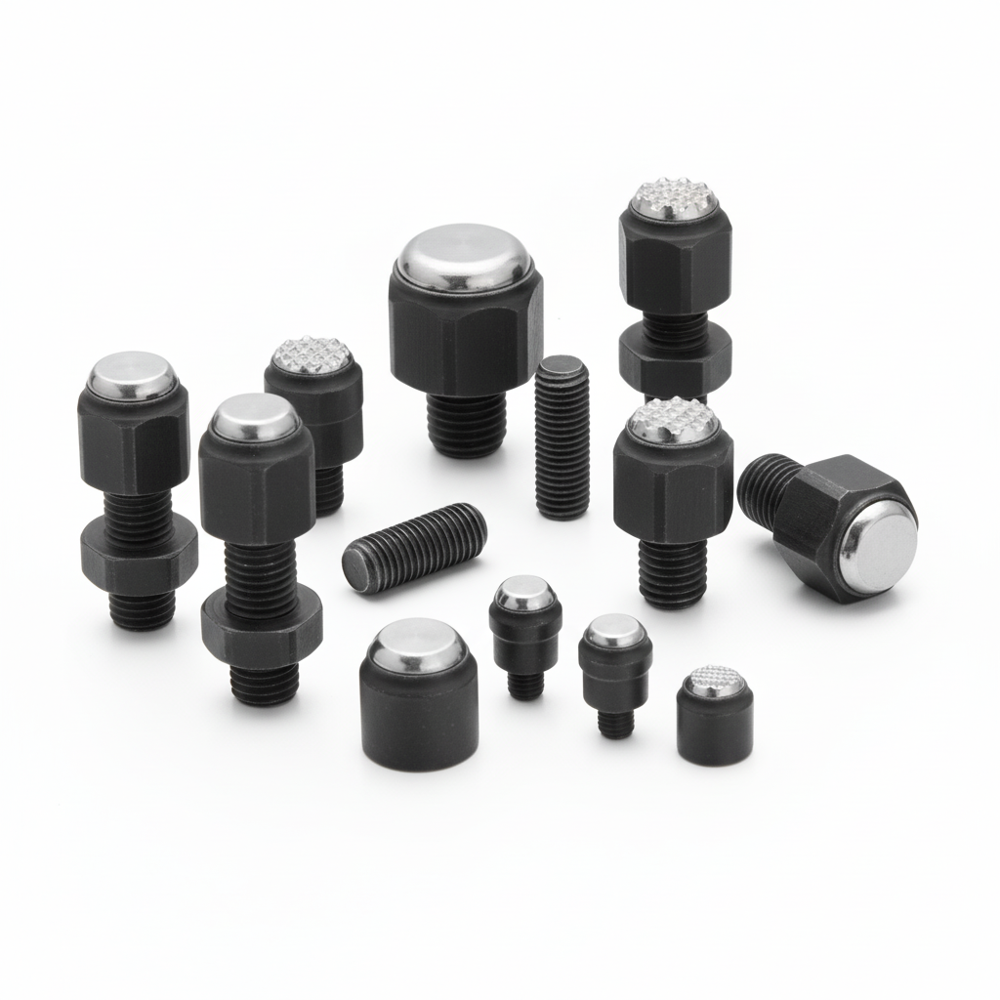
Adjustable self-aligning pads are used when precise alignment or swivelling is required to achieve optimum performance. These adjustable solutions offer flexibility and allow users to adapt their systems to specific requirements. Self-aligning pads are used as stop, support and thrust pad and are suitable for installation in clamping element
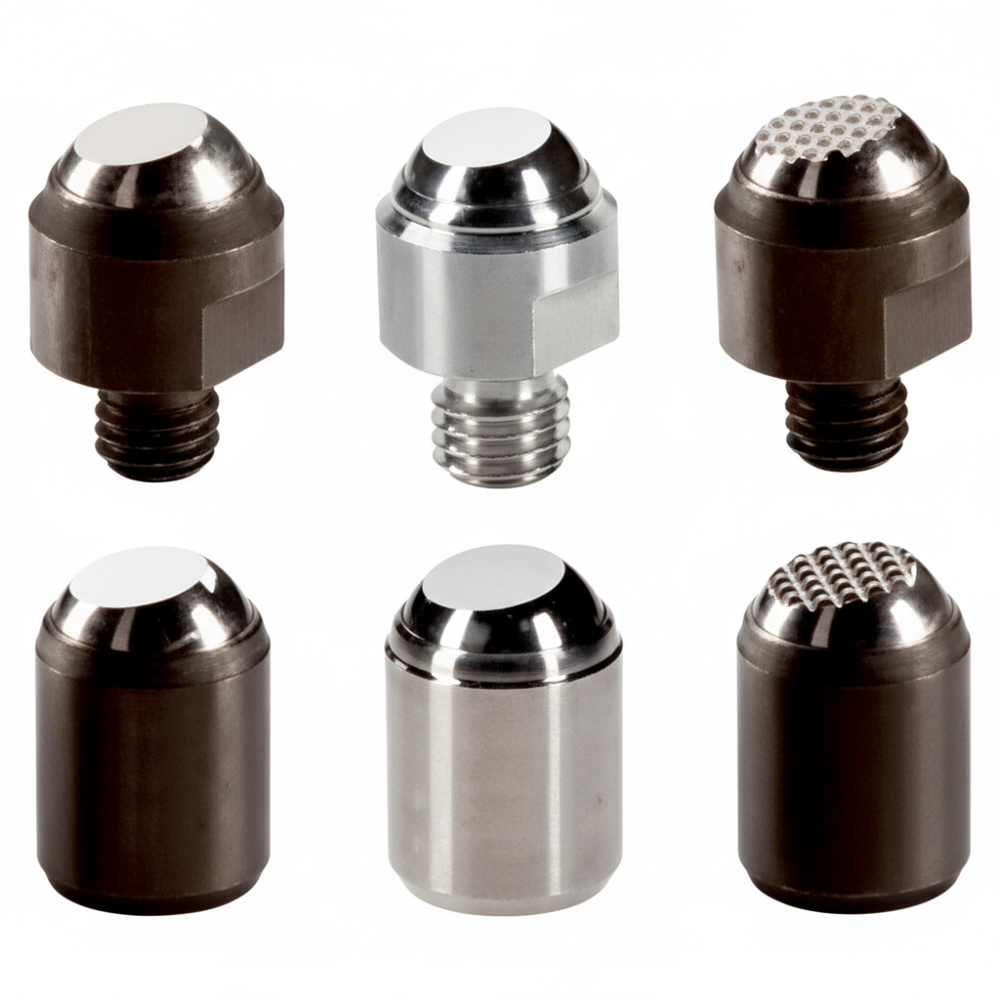
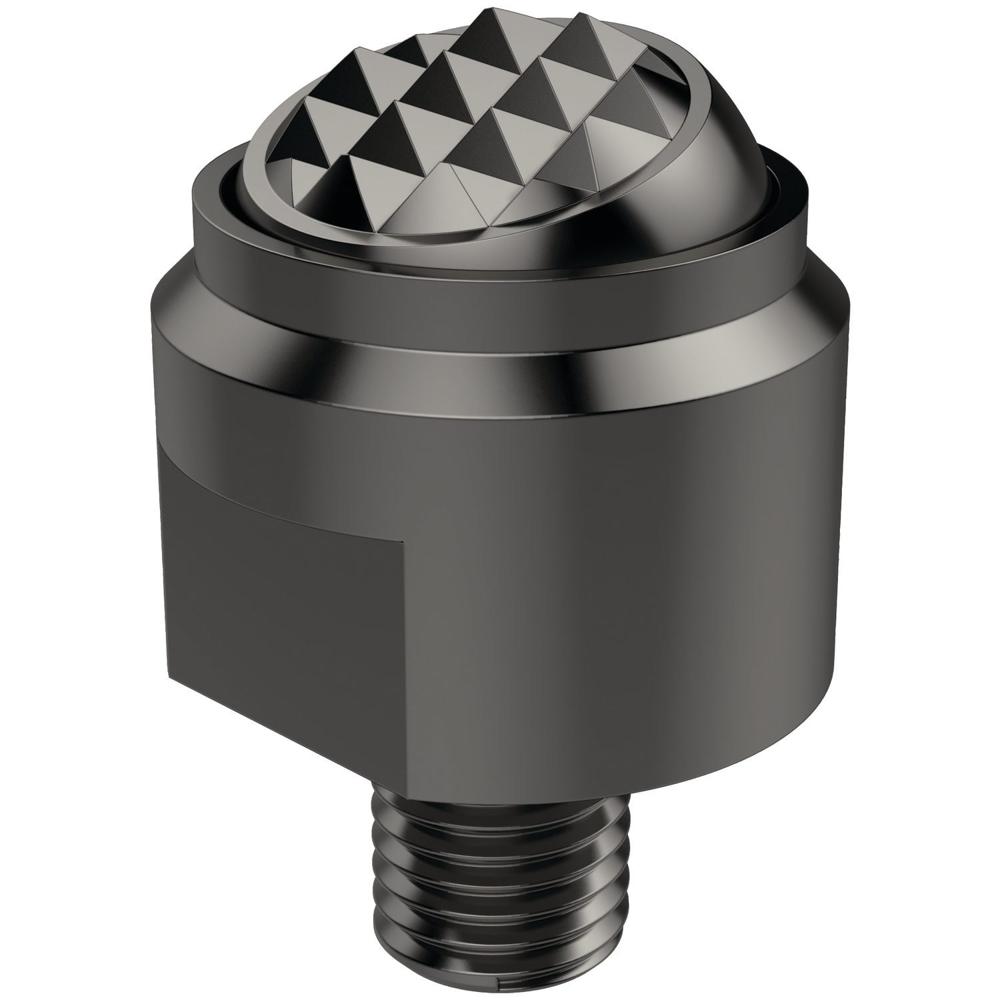
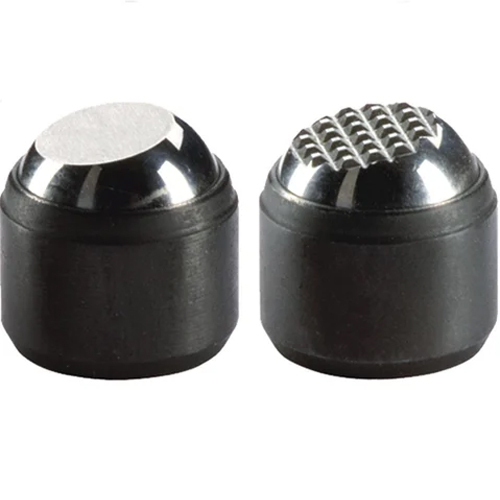
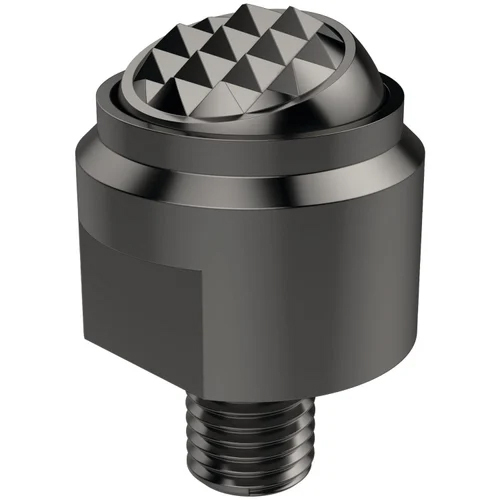
Versatile Self-Aligning DesignThe convex or serrated contact surfaces of our adjustable pads ensure optimal grip and adaptability for irregular workpieces. With a swivel angle of up to 9, these pads conform efficiently to the clamped surface, reducing misalignment and increasing stability during the workholding process.
Durable Construction for Demanding EnvironmentsConstructed from hardened steel or corrosion-resistant stainless steel, our pads boast a hardness of HRC 45-55. The finishes-black oxide, zinc plated, or plain-provide additional protection. Their high load capacity of up to 30 kN and operational range from -20C to +200C make them suitable even for heavy-duty applications.
Flexible Mounting and Size OptionsEach pad features a threaded stud (available in M8, M10, M12, or custom) for easy, direct installation in jigs and fixtures. This flexible design accommodates a broad spectrum of assembly and tooling requirements, ensuring a precise fit for your manufacturing and workholding needs.
FAQ's of Adjustable self Aligning Pad:
Q: How does the self-aligning feature of these pads improve workholding?
A: The self-aligning mechanism, allowing up to 9 of swivel, enables the pad to adjust to the workpiece's contours. This minimizes stress concentrations, enhances stability, and ensures uniform clamping pressure, especially on irregular or angled surfaces.
Q: What are the main usage scenarios for adjustable self-aligning pads?
A: These pads are ideal for clamping, supporting, and positioning workpieces in jigs, fixtures, and assembly tooling. They are commonly used in manufacturing environments where precision and secure workholding are essential.
Q: When should I choose serrated versus convex contact surfaces?
A: Serrated surfaces provide better grip on rough or slippery materials, whereas convex surfaces are better for delicate or polished parts where minimal marking is desired. Selection depends on the material and required holding force of your application.
Q: Where can these pads be installed in industrial setups?
A: The threaded stud design allows these pads to be directly inserted into a wide variety of components, such as fixture plates or machine beds, making installation straightforward in any location that requires adjustable support or clamping.
Q: What process ensures the pads' durability and corrosion resistance?
A: Our pads are manufactured from hardened steel or stainless steel, with available finishes like black oxide or zinc plating, which shield the pads from wear and environmental corrosion, extending their operational life in challenging conditions.
Q: What are the benefits of using these pads in jigs and fixtures?
A: Adjustable self-aligning pads offer secure and adaptable workholding, reduce set-up times, and prevent surface damage to the workpiece. Their robust construction supports high loads, ensuring reliability and efficiency in production processes.




 Send Inquiry

 Send Inquiry